npm scope compromise checker for AI coding workflows.
Use this npm scope compromise checker before an AI coding agent, CI job, or developer workstation trusts a package update. Paste package.json, package-lock.json, pnpm-lock.yaml, yarn.lock, or a pull request diff, then review scoped packages, lifecycle scripts, registry sources, and credential proximity.
The npm scope compromise checker is intentionally conservative. It does not claim to prove that a package is malicious or safe. It gives indie developers and small teams a repeatable way to decide which dependency changes deserve manual review before Codex, Claude Code, Cursor, Copilot, or another agent runs install commands.
Quick answer
An npm scope compromise checker turns a dependency diff into a reviewable trust decision.
A useful npm scope compromise checker does not only list packages. It asks whether a new scope appeared, whether a lifecycle script can run, whether a lockfile points at an unexpected source, whether install commands touch secrets, and whether an AI coding agent should be allowed to continue without human approval.
{
  "dependencies": {
    "@company/ui": "1.4.2",
    "@company/build-plugin": "2.1.0"
  },
  "scripts": {
    "postinstall": "node scripts/setup.js"
  }
}
Start with a snippet. Escalate to a clean-machine review when install scripts, private registries, or credentials are involved.
Dependency trust boundary
Audit focus
- Architecture map before cleanup
- Risky files and review boundaries
- Context pack for AI coding agents
Map
Audit
Handoff
npm scope compromise checker
Paste a package file snippet. The npm scope compromise checker looks for scoped packages, lifecycle scripts, token-like text, unusual dependency sources, and install-time review signals. Keep sensitive customer code out of the browser if your team policy forbids local paste-based tools.
Scoped package exposure
List every @scope/name package in package.json, package-lock.json, pnpm-lock.yaml, yarn.lock, and SBOM files before assuming the dependency tree is clean.
Lifecycle script risk
Flag install, preinstall, postinstall, prepare, prepack, and build scripts that could run code during install, CI, or local agent setup.
Registry and tarball source
Review whether a dependency resolves from npm, a Git URL, a direct tarball, a private registry, a workspace link, or an unexpected mirror.
AI agent trust boundary
Treat dependency changes as a trust boundary before giving Codex, Claude Code, Cursor, or another agent permission to install and run project scripts.
Credential proximity
Check whether npm tokens, GitHub tokens, cloud keys, package signing material, or publish credentials were available when a suspicious install happened.
Evidence before action
Record affected packages, lockfile line references, install commands, CI runs, reviewer, and the remediation decision before reopening normal automation.
Why developers search for an npm scope compromise checker
A package compromise is rarely a tidy engineering task. It touches package managers, lockfiles, install scripts, CI runners, local terminals, private registries, GitHub tokens, npm tokens, cloud keys, and the trust boundary around agentic developer tools. A developer searching for an npm scope compromise checker usually does not want a generic article. They want to know whether their repository, lockfile, and install path are safe enough to continue.
The npm scope compromise checker is useful because scoped packages look normal in modern JavaScript projects. A single @scope/name dependency may be an internal package, a vendor package, a transitive build helper, or a newly introduced package that deserves extra scrutiny. The review should not panic over every scope. It should separate normal dependency ownership from new scopes, new lifecycle scripts, registry changes, and automation paths that can execute before a human reads the code.
For RomantiCode, the npm scope compromise checker sits beside MCP security scanner, VS Code extension security checklist, AI extension permissions checklist, and AI code audit report. Together, these pages form a developer trust cluster: before an AI coding agent gets more authority, the team should understand the tools, dependencies, secrets, and codebase context around that authority.
| Risk | Why it matters | npm scope compromise checker action |
|---|---|---|
| New scoped package | A compromised or copycat scope can blend into normal dependency updates. | Confirm publisher, registry, version history, repository, and release notes before install. |
| Lifecycle script | Install-time scripts can run before a developer or agent reads the source. | Review script purpose, diff, and environment access; disable scripts for inspection when possible. |
| Git or tarball dependency | A lockfile may point outside the expected npm registry path. | Verify the resolved URL and decide whether that source is allowed for the repository. |
| Broad workspace install | An agent may run npm install while secrets, env files, and private repos are nearby. | Use a clean workspace, least-privilege credentials, and manual approval for install commands. |
| Unreviewed transitive jump | A small direct dependency update can pull many new transitive packages. | Compare old and new lockfiles before merging dependency automation. |
| Missing incident note | Teams forget which repos, tokens, and machines were exposed. | Keep a short npm scope compromise checker note with the pull request or security log. |
Use the npm scope compromise checker before install becomes routine
The safest time to run an npm scope compromise checker is before a dependency update is merged, before CI runs privileged install commands, and before an AI coding agent is allowed to execute project scripts.
- Paste the relevant package.json or lockfile snippet into the npm scope compromise checker and note every scoped package.
- Separate direct dependencies from transitive dependencies, then mark any new package, new scope, changed registry, or lifecycle script.
- Run the review before an AI coding agent installs dependencies, runs tests, generates reports, or opens the repository in a privileged workstation.
- If anything looks suspicious, inspect in a clean environment, rotate exposed tokens, and keep the review result with the pull request.
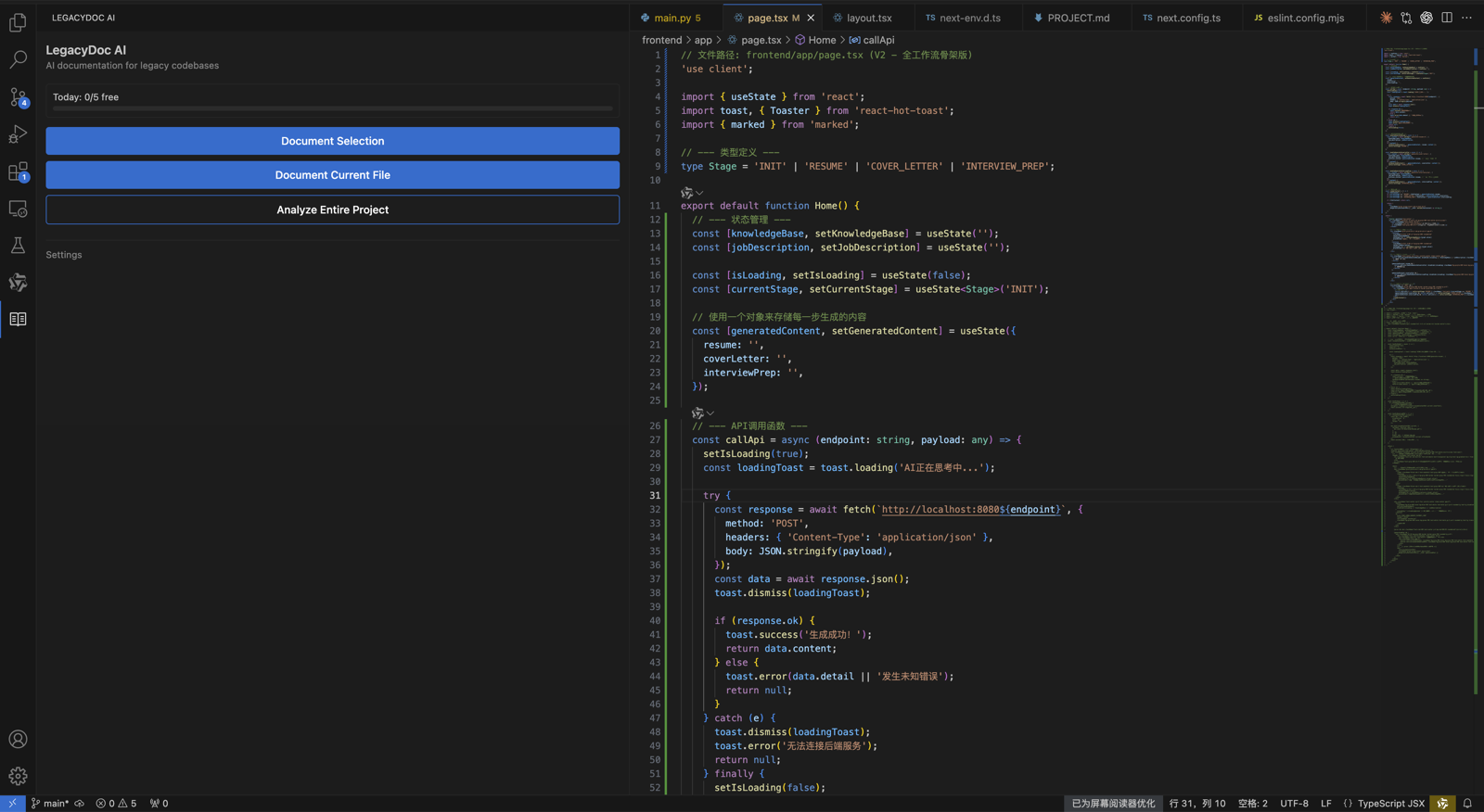
- After the repository is safe enough to inspect, use LegacyDoc AI to summarize affected modules, risky files, and the handoff note for human reviewers.
Agent boundary
Do not let the agent be the first reviewer of a risky install.
AI coding agents are good at explaining code, but they are not the right first line of defense when the question is whether a package should run at all. Use the npm scope compromise checker before asking an agent to install packages, run tests, collect logs, or summarize build failures. Once a dependency change is reviewed, an agent can help with documentation, remediation notes, and codebase impact analysis.
A practical policy is simple: dependency installs require human approval when a new scope appears, a lifecycle script changes, a registry source changes, a lockfile jumps unexpectedly, or the workstation has sensitive credentials nearby. Put that policy in AGENTS.md or PROJECT.md so the rule follows the repository, not just one chat thread.
Codebase context
Turn a dependency review into a codebase handoff.
After the npm scope compromise checker identifies the dependency surface, reviewers still need to understand which modules depend on the package, which scripts run it, which tests cover it, and which teams own the affected code. That is where a codebase map and audit handoff become useful.
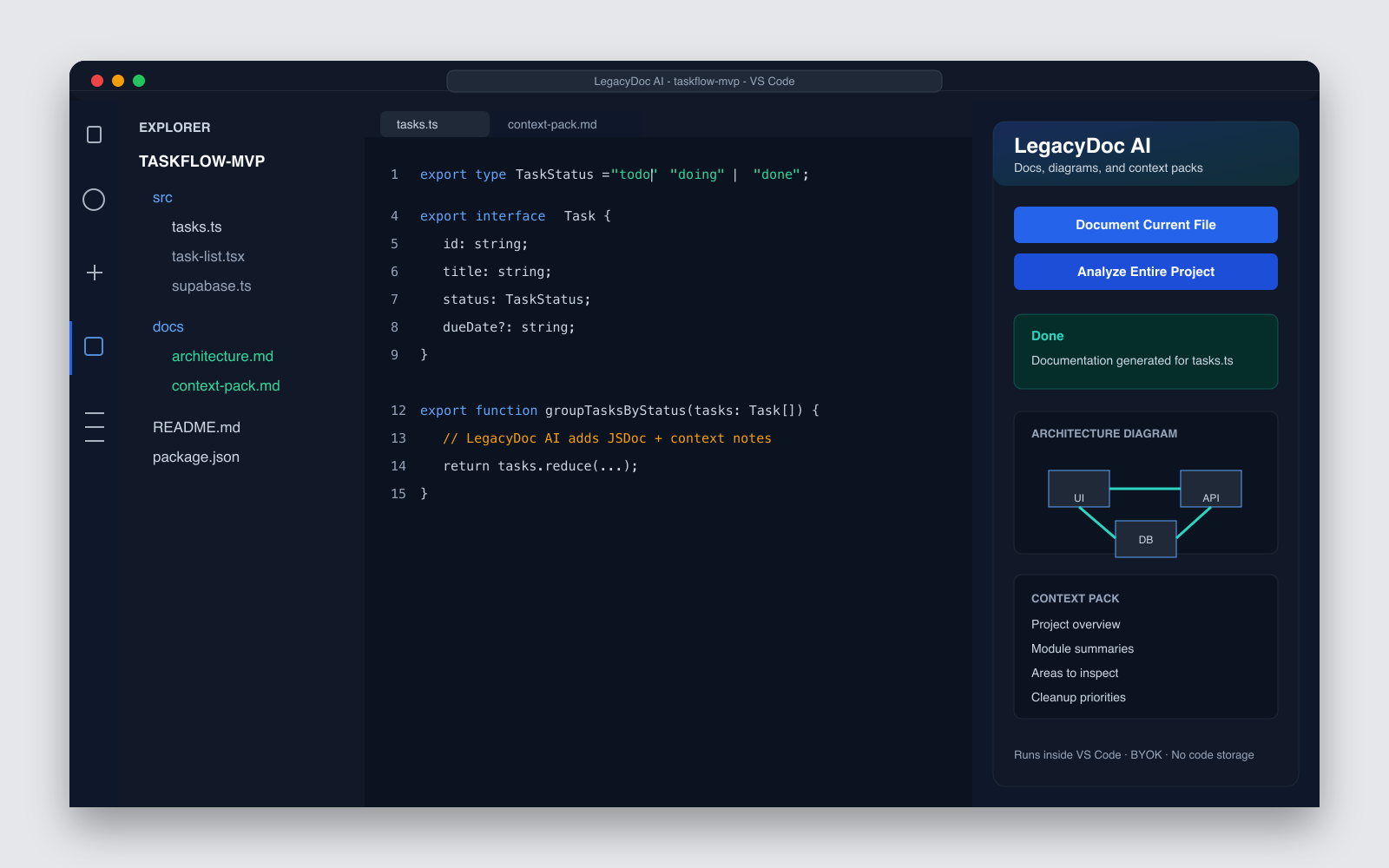
LegacyDoc AI generates module summaries, Mermaid maps, risky-file notes, cleanup priorities, and AI-ready context packs inside VS Code. Use the npm scope compromise checker to decide whether the dependency path needs manual review, then use LegacyDoc AI to prepare the context humans need for remediation.
Boundary note
The npm scope compromise checker should stay defensive and evidence-first.
Do not use a checklist as an excuse to make confident claims about package safety. A real npm incident review may need official advisories, package registry history, source review, endpoint security, token rotation, clean-machine testing, and a human incident owner. The npm scope compromise checker is the lightweight front door: it catches the questions that should be answered before automation continues.
If the npm scope compromise checker result shows a new scope, install-time scripts, direct tarball URLs, private registry ambiguity, or credential exposure, slow down. Review the dependency change outside the normal workstation, disable scripts during inspection when possible, rotate exposed credentials, and record what was checked before restoring regular AI coding agent workflows.
npm scope compromise checker decision checklist
This section keeps npm scope compromise checker focused on one search intent. A reader comparing options for npm scope compromise checker should quickly see the task, the evidence, the handoff value, and the next action without leaving the page.
npm scope compromise checker checkpoint 1
Use npm scope compromise checker as the page promise, then verify that npm scope compromise checker is supported by the headline, the example, the internal links, the call to action, and the reader's next step. A strong npm scope compromise checker page should explain who needs npm scope compromise checker, what evidence is required before acting, and how RomantiCode reduces uncertainty for founders, developers, cleanup specialists, and AI coding agents. Keep the npm scope compromise checker checklist tied to a real workflow: inspect the codebase, map risky files, prepare context, compare options, and decide whether to audit, refactor, hire help, or continue with an AI assistant.
npm scope compromise checker checkpoint 2
Use npm scope compromise checker as the page promise, then verify that npm scope compromise checker is supported by the headline, the example, the internal links, the call to action, and the reader's next step. A strong npm scope compromise checker page should explain who needs npm scope compromise checker, what evidence is required before acting, and how RomantiCode reduces uncertainty for founders, developers, cleanup specialists, and AI coding agents. Keep the npm scope compromise checker checklist tied to a real workflow: inspect the codebase, map risky files, prepare context, compare options, and decide whether to audit, refactor, hire help, or continue with an AI assistant.
npm scope compromise checker checkpoint 3
Use npm scope compromise checker as the page promise, then verify that npm scope compromise checker is supported by the headline, the example, the internal links, the call to action, and the reader's next step. A strong npm scope compromise checker page should explain who needs npm scope compromise checker, what evidence is required before acting, and how RomantiCode reduces uncertainty for founders, developers, cleanup specialists, and AI coding agents. Keep the npm scope compromise checker checklist tied to a real workflow: inspect the codebase, map risky files, prepare context, compare options, and decide whether to audit, refactor, hire help, or continue with an AI assistant.
npm scope compromise checker checkpoint 4
Use npm scope compromise checker as the page promise, then verify that npm scope compromise checker is supported by the headline, the example, the internal links, the call to action, and the reader's next step. A strong npm scope compromise checker page should explain who needs npm scope compromise checker, what evidence is required before acting, and how RomantiCode reduces uncertainty for founders, developers, cleanup specialists, and AI coding agents. Keep the npm scope compromise checker checklist tied to a real workflow: inspect the codebase, map risky files, prepare context, compare options, and decide whether to audit, refactor, hire help, or continue with an AI assistant.
npm scope compromise checker checkpoint 5
Use npm scope compromise checker as the page promise, then verify that npm scope compromise checker is supported by the headline, the example, the internal links, the call to action, and the reader's next step. A strong npm scope compromise checker page should explain who needs npm scope compromise checker, what evidence is required before acting, and how RomantiCode reduces uncertainty for founders, developers, cleanup specialists, and AI coding agents. Keep the npm scope compromise checker checklist tied to a real workflow: inspect the codebase, map risky files, prepare context, compare options, and decide whether to audit, refactor, hire help, or continue with an AI assistant.
npm scope compromise checker checkpoint 6
Use npm scope compromise checker as the page promise, then verify that npm scope compromise checker is supported by the headline, the example, the internal links, the call to action, and the reader's next step. A strong npm scope compromise checker page should explain who needs npm scope compromise checker, what evidence is required before acting, and how RomantiCode reduces uncertainty for founders, developers, cleanup specialists, and AI coding agents. Keep the npm scope compromise checker checklist tied to a real workflow: inspect the codebase, map risky files, prepare context, compare options, and decide whether to audit, refactor, hire help, or continue with an AI assistant.
npm scope compromise checker checkpoint 7
Use npm scope compromise checker as the page promise, then verify that npm scope compromise checker is supported by the headline, the example, the internal links, the call to action, and the reader's next step. A strong npm scope compromise checker page should explain who needs npm scope compromise checker, what evidence is required before acting, and how RomantiCode reduces uncertainty for founders, developers, cleanup specialists, and AI coding agents. Keep the npm scope compromise checker checklist tied to a real workflow: inspect the codebase, map risky files, prepare context, compare options, and decide whether to audit, refactor, hire help, or continue with an AI assistant.
npm scope compromise checker checkpoint 8
Use npm scope compromise checker as the page promise, then verify that npm scope compromise checker is supported by the headline, the example, the internal links, the call to action, and the reader's next step. A strong npm scope compromise checker page should explain who needs npm scope compromise checker, what evidence is required before acting, and how RomantiCode reduces uncertainty for founders, developers, cleanup specialists, and AI coding agents. Keep the npm scope compromise checker checklist tied to a real workflow: inspect the codebase, map risky files, prepare context, compare options, and decide whether to audit, refactor, hire help, or continue with an AI assistant.
npm scope compromise checker checkpoint 9
Use npm scope compromise checker as the page promise, then verify that npm scope compromise checker is supported by the headline, the example, the internal links, the call to action, and the reader's next step. A strong npm scope compromise checker page should explain who needs npm scope compromise checker, what evidence is required before acting, and how RomantiCode reduces uncertainty for founders, developers, cleanup specialists, and AI coding agents. Keep the npm scope compromise checker checklist tied to a real workflow: inspect the codebase, map risky files, prepare context, compare options, and decide whether to audit, refactor, hire help, or continue with an AI assistant.
npm scope compromise checker checkpoint 10
Use npm scope compromise checker as the page promise, then verify that npm scope compromise checker is supported by the headline, the example, the internal links, the call to action, and the reader's next step. A strong npm scope compromise checker page should explain who needs npm scope compromise checker, what evidence is required before acting, and how RomantiCode reduces uncertainty for founders, developers, cleanup specialists, and AI coding agents. Keep the npm scope compromise checker checklist tied to a real workflow: inspect the codebase, map risky files, prepare context, compare options, and decide whether to audit, refactor, hire help, or continue with an AI assistant.
npm scope compromise checker checkpoint 11
Use npm scope compromise checker as the page promise, then verify that npm scope compromise checker is supported by the headline, the example, the internal links, the call to action, and the reader's next step. A strong npm scope compromise checker page should explain who needs npm scope compromise checker, what evidence is required before acting, and how RomantiCode reduces uncertainty for founders, developers, cleanup specialists, and AI coding agents. Keep the npm scope compromise checker checklist tied to a real workflow: inspect the codebase, map risky files, prepare context, compare options, and decide whether to audit, refactor, hire help, or continue with an AI assistant.
npm scope compromise checker checkpoint 12
Use npm scope compromise checker as the page promise, then verify that npm scope compromise checker is supported by the headline, the example, the internal links, the call to action, and the reader's next step. A strong npm scope compromise checker page should explain who needs npm scope compromise checker, what evidence is required before acting, and how RomantiCode reduces uncertainty for founders, developers, cleanup specialists, and AI coding agents. Keep the npm scope compromise checker checklist tied to a real workflow: inspect the codebase, map risky files, prepare context, compare options, and decide whether to audit, refactor, hire help, or continue with an AI assistant.
npm scope compromise checker checkpoint 13
Use npm scope compromise checker as the page promise, then verify that npm scope compromise checker is supported by the headline, the example, the internal links, the call to action, and the reader's next step. A strong npm scope compromise checker page should explain who needs npm scope compromise checker, what evidence is required before acting, and how RomantiCode reduces uncertainty for founders, developers, cleanup specialists, and AI coding agents. Keep the npm scope compromise checker checklist tied to a real workflow: inspect the codebase, map risky files, prepare context, compare options, and decide whether to audit, refactor, hire help, or continue with an AI assistant.
npm scope compromise checker checkpoint 14
Use npm scope compromise checker as the page promise, then verify that npm scope compromise checker is supported by the headline, the example, the internal links, the call to action, and the reader's next step. A strong npm scope compromise checker page should explain who needs npm scope compromise checker, what evidence is required before acting, and how RomantiCode reduces uncertainty for founders, developers, cleanup specialists, and AI coding agents. Keep the npm scope compromise checker checklist tied to a real workflow: inspect the codebase, map risky files, prepare context, compare options, and decide whether to audit, refactor, hire help, or continue with an AI assistant.
npm scope compromise checker checkpoint 15
Use npm scope compromise checker as the page promise, then verify that npm scope compromise checker is supported by the headline, the example, the internal links, the call to action, and the reader's next step. A strong npm scope compromise checker page should explain who needs npm scope compromise checker, what evidence is required before acting, and how RomantiCode reduces uncertainty for founders, developers, cleanup specialists, and AI coding agents. Keep the npm scope compromise checker checklist tied to a real workflow: inspect the codebase, map risky files, prepare context, compare options, and decide whether to audit, refactor, hire help, or continue with an AI assistant.
npm scope compromise checker checkpoint 16
Use npm scope compromise checker as the page promise, then verify that npm scope compromise checker is supported by the headline, the example, the internal links, the call to action, and the reader's next step. A strong npm scope compromise checker page should explain who needs npm scope compromise checker, what evidence is required before acting, and how RomantiCode reduces uncertainty for founders, developers, cleanup specialists, and AI coding agents. Keep the npm scope compromise checker checklist tied to a real workflow: inspect the codebase, map risky files, prepare context, compare options, and decide whether to audit, refactor, hire help, or continue with an AI assistant.
npm scope compromise checker checkpoint 17
Use npm scope compromise checker as the page promise, then verify that npm scope compromise checker is supported by the headline, the example, the internal links, the call to action, and the reader's next step. A strong npm scope compromise checker page should explain who needs npm scope compromise checker, what evidence is required before acting, and how RomantiCode reduces uncertainty for founders, developers, cleanup specialists, and AI coding agents. Keep the npm scope compromise checker checklist tied to a real workflow: inspect the codebase, map risky files, prepare context, compare options, and decide whether to audit, refactor, hire help, or continue with an AI assistant.
npm scope compromise checker checkpoint 18
Use npm scope compromise checker as the page promise, then verify that npm scope compromise checker is supported by the headline, the example, the internal links, the call to action, and the reader's next step. A strong npm scope compromise checker page should explain who needs npm scope compromise checker, what evidence is required before acting, and how RomantiCode reduces uncertainty for founders, developers, cleanup specialists, and AI coding agents. Keep the npm scope compromise checker checklist tied to a real workflow: inspect the codebase, map risky files, prepare context, compare options, and decide whether to audit, refactor, hire help, or continue with an AI assistant.
npm scope compromise checker checkpoint 19
Use npm scope compromise checker as the page promise, then verify that npm scope compromise checker is supported by the headline, the example, the internal links, the call to action, and the reader's next step. A strong npm scope compromise checker page should explain who needs npm scope compromise checker, what evidence is required before acting, and how RomantiCode reduces uncertainty for founders, developers, cleanup specialists, and AI coding agents. Keep the npm scope compromise checker checklist tied to a real workflow: inspect the codebase, map risky files, prepare context, compare options, and decide whether to audit, refactor, hire help, or continue with an AI assistant.
npm scope compromise checker checkpoint 20
Use npm scope compromise checker as the page promise, then verify that npm scope compromise checker is supported by the headline, the example, the internal links, the call to action, and the reader's next step. A strong npm scope compromise checker page should explain who needs npm scope compromise checker, what evidence is required before acting, and how RomantiCode reduces uncertainty for founders, developers, cleanup specialists, and AI coding agents. Keep the npm scope compromise checker checklist tied to a real workflow: inspect the codebase, map risky files, prepare context, compare options, and decide whether to audit, refactor, hire help, or continue with an AI assistant.
Verification sources
Use official advisories before making a final incident decision.
The npm scope compromise checker is a front-door triage workflow. When a real package compromise is suspected, verify affected scopes, package versions, install windows, and remediation steps against official advisories and specialist security writeups before rotating credentials or closing an incident.
Official advisory
Red Hat security bulletin
Confirm affected namespace, product impact notes, and official remediation guidance.
Security writeup
StepSecurity analysis
Review install-time risk, affected package patterns, and supply-chain hardening ideas.
Security writeup
Snyk Miasma analysis
Use a second source when checking package releases, provenance, and response context.
Related resources
Tool
MCP Security Scanner
Review MCP tools, filesystem boundaries, network egress, secrets, and prompt-injection risk.
Checklist
VS Code Extension Security Checklist
Review publisher trust, updates, secrets, network behavior, and incident response for VS Code extensions.
Checklist
VS Code AI Extension Permissions Checklist
Review AI extension workspace access, provider route, terminals, secrets, profiles, and team policy.
Tool
AI Code Audit Report
Generate a context pack and risky-file notes before giving agents or reviewers broader codebase access.
FAQ
What is an npm scope compromise checker?
An npm scope compromise checker is a defensive review workflow for scoped npm packages. It helps developers look for risky scoped-package changes, lifecycle scripts, unusual registry sources, lockfile drift, and credential exposure before trusting a dependency update.
Can this page prove that a package is safe?
No. The npm scope compromise checker is a planning and review aid, not a malware scanner, official advisory database, or formal supply-chain audit. It helps you decide what needs manual verification before install, CI, or agent automation.
Why check npm scopes before using AI coding agents?
AI coding agents often install dependencies, run tests, read logs, and summarize project state. If a lockfile or package script is suspicious, the agent may execute code before a human has reviewed the trust boundary.
What files should I review with an npm scope compromise checker?
Start with package.json, package-lock.json, pnpm-lock.yaml, yarn.lock, npm-shrinkwrap.json, SBOM exports, CI dependency diffs, and any pull request that changes package manager behavior.
How does this relate to MCP security review?
Both reviews protect the agent trust boundary. MCP security review asks what tools an agent can call. The npm scope compromise checker asks whether dependency changes and install scripts are safe enough before the agent or CI runs them.
How does LegacyDoc AI help after a dependency incident?
LegacyDoc AI runs inside VS Code and can generate architecture maps, risky-file notes, module summaries, and AI-ready context packs. That helps a reviewer understand which parts of the codebase may be affected after a dependency review.
Review dependencies before the agent runs install commands.
Use the npm scope compromise checker to capture the dependency trust boundary, then install LegacyDoc AI to prepare the codebase context and remediation handoff for reviewers.